"A human checked it" is a claim until you can show it
21 November 2026 · Deliverd Engineering Team · 5 min read
The European Commission's guidelines on the AI Act's transparency rules, Article 50, are out. They were published in the Official Journal on 12 November. The obligations themselves have applied since 2 August 2026, and the guidelines aren't binding, but they are the clearest reading yet of what the Commission expects.
Most of the attention has gone to watermarks and deepfakes. One quieter point matters to anyone who uses AI to write things people will read.
This post is a practical reading for teams publishing with AI. It isn't legal advice; your own counsel decides what applies to you.
The exemption for reviewed text
If you publish AI-generated or AI-edited text to inform the public on matters of public interest, Article 50(4) says you must disclose that it was AI. There is one way out. The label isn't needed when the text has gone through human review or editorial control, and a person or organisation holds editorial responsibility for publishing it.
The guidelines read that exemption narrowly:
- The review has to be real. People with the right knowledge look at the substance. Checking the facts is the minimum. A grammar pass doesn't count, an automated check doesn't count, and an editorial policy that exists only on paper doesn't count.
- Someone answers for it. The person or body with editorial responsibility should be identifiable.
- A later AI edit undoes it. If AI changes the text substantially after the review, the earlier review no longer covers it.
So the exemption is a claim about a sequence
Put those together and "we don't label it because a human reviewed it" is really three statements:
- This named person reviewed the text.
- They reviewed this version of it.
- What went out is that version, and nothing substantial changed in between.
The guidelines don't tell you to keep records. But if a regulator, a journalist or a reader asks, those three statements are what you'll have to show, and "the editor said it was fine" won't answer the second or third.
Where that record lives matters too. If the only evidence of the review sits inside the tool that wrote and edited the text, the writer is also the witness. "A human checked it" then becomes the same kind of claim as "no label means it's real": easy to say, impossible to check.
How Deliverd keeps that record
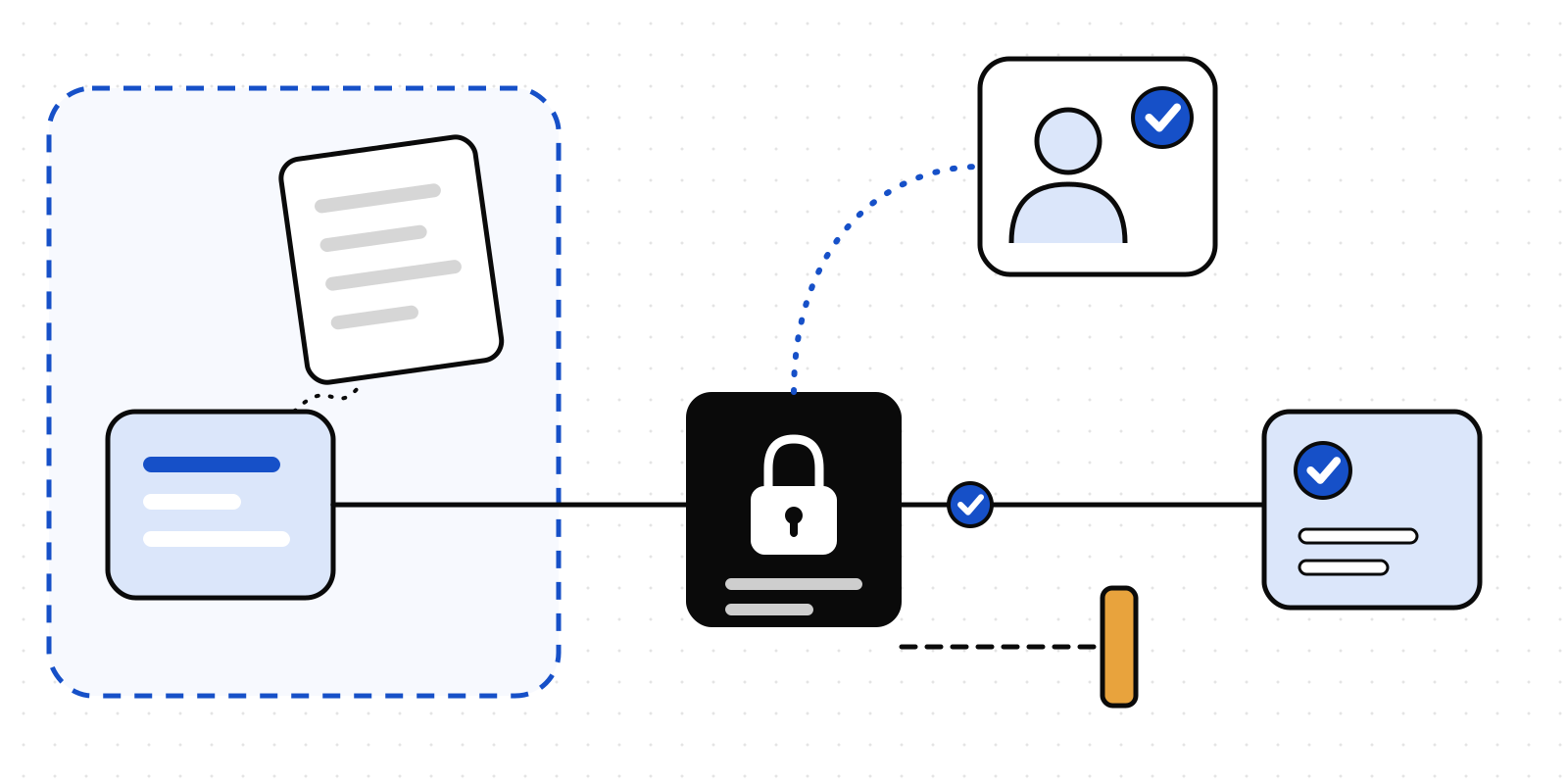
Deliverd sits outside the tool that writes. It's where the yes is asked for and written down, so the record of the review doesn't depend on the writer.
- A review names a version. When someone is asked to review a report, the request can name the version under review. A republish in the meantime doesn't move it, so the approval is of what the reviewer actually read.
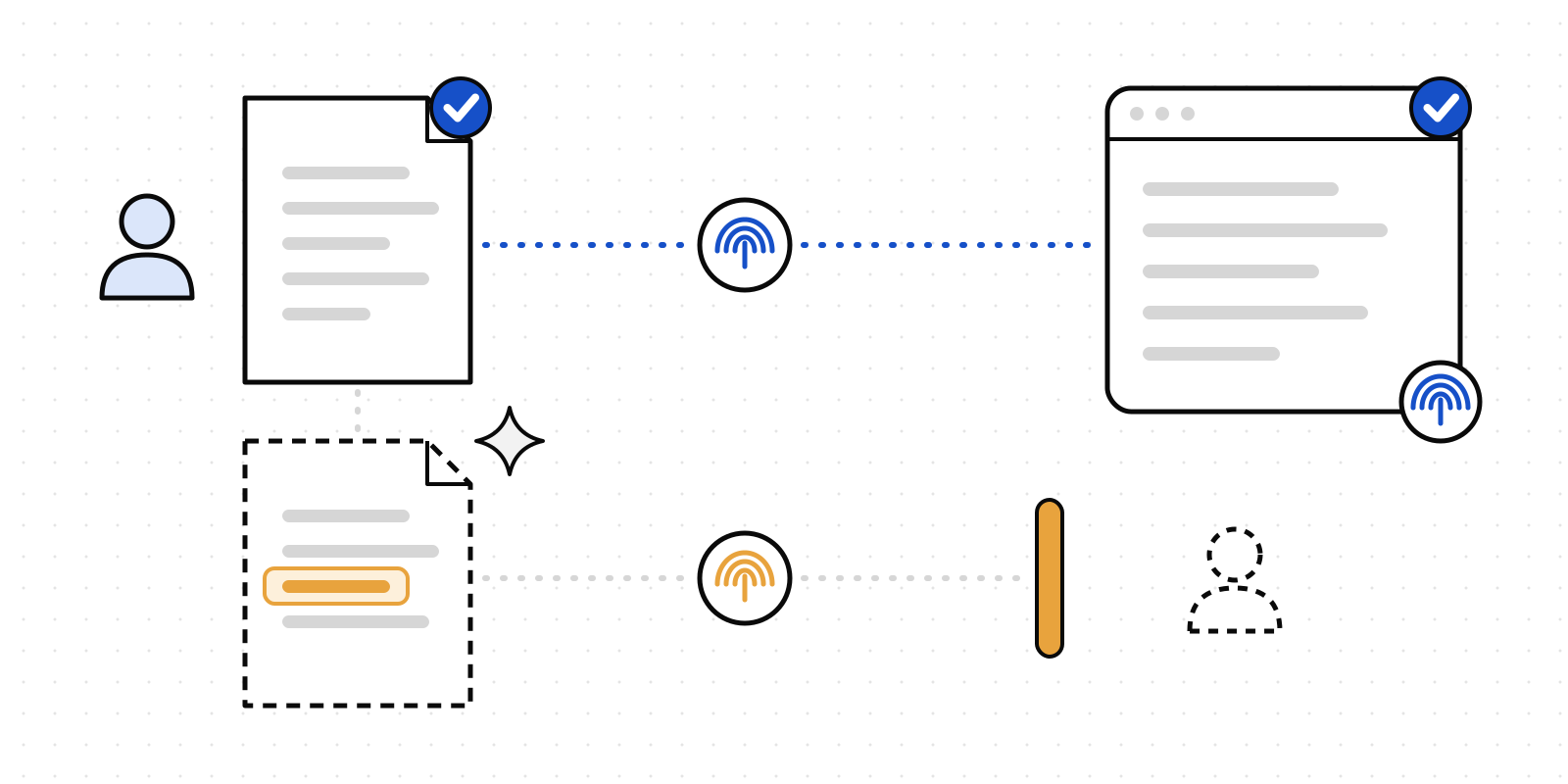
- Permission is bound to a hash. Before an agent publishes, it asks the gate and names the artifact with its SHA-256, or a Deliverd report version, whose hash Deliverd reads itself. The yes covers that artifact and nothing else. When the agent reports what it published, a different hash is refused as
approval_invalidatedand nothing is recorded. A substantial edit after the review needs a new review, which is exactly what the guidelines describe. - The record says how much was checked. When Deliverd makes the approved version live itself, the receipt says
verified. When the agent publishes elsewhere and reports the approved hash, it sayshash_matched. When there was nothing to check against, it saysreported. You never have to guess which. - It shows whether anyone really looked. Each approval keeps when the approver first opened the request and when they decided, so a yes given seconds after opening stands out. That's the difference between review and a rubber stamp.
- It can be produced. The audit trail refuses edits, and exports as one evidence pack in JSON, CSV or PDF.
What you get is a record that says who approved which version, when, and whether what went out matched it.
Agents must say what they are, and who they act for
The guidelines also cover AI that talks to people. A chatbot or agent has to make clear it's AI at the first interaction at the latest, and a notice buried in the terms and conditions isn't enough. An agent acting for someone should also say whose behalf it acts on.
The greeting is your agent's job, and Deliverd doesn't write it. What Deliverd holds is the answer behind it. An agent either connects as the person who signed it in, or as an agent identity an administrator creates on Agents → Agents, which acts under its own name and only inside the limits set there. Every request it makes is recorded against that identity. So "who does this agent act for?" is answered by a record, not by a line in a prompt.
What this doesn't do
Deliverd doesn't watermark content, detect deepfakes, or decide whether your text is on a matter of public interest or whether an edit was substantial. Those calls are yours and your counsel's. It doesn't make you compliant on its own. It keeps the evidence that your review happened and that what went out was what was reviewed, which is the part most teams can't show today.
If you'd like to see it on your own publishing workflow, book a pilot.