Move at pace, and keep compliance happy
24 October 2026 · Deliverd Engineering Team · 5 min read
Every business that puts AI to work ends up with two groups pulling in different directions. The people doing the work have goals: ship the feature, close the month, answer the customer. The people responsible for risk have rules: what may leave the building, who signs off a payment, which AI tools are approved. Both are right, and neither should have to lose.
Our view is simple: rules shouldn't slow innovation down. Teams should be able to move at pace without worrying whether they are breaking something, and compliance should be able to sleep at night knowing the risky steps were checked and the proof is there. The way to get both is to change where the rules sit.
Where compliance usually sits
In most organisations, compliance happens at one of two moments.
Before the work. A policy document, an approval committee, a form to fill in before anyone may try a new tool. It feels safe, but it treats every idea as risky until proven otherwise, so the cheap experiments wait as long as the dangerous ones. People route around it, and the AI nobody approved is the result.
After the work. An audit, a review, a spreadsheet of who did what, assembled by hand when someone asks. By then the action has happened. If it was wrong, the rule has only told you so.
Neither moment is when the risk actually arrives. The risk arrives when an agent is about to send the email, release the payment, merge the change or share the file.
Move the rule to the moment of action
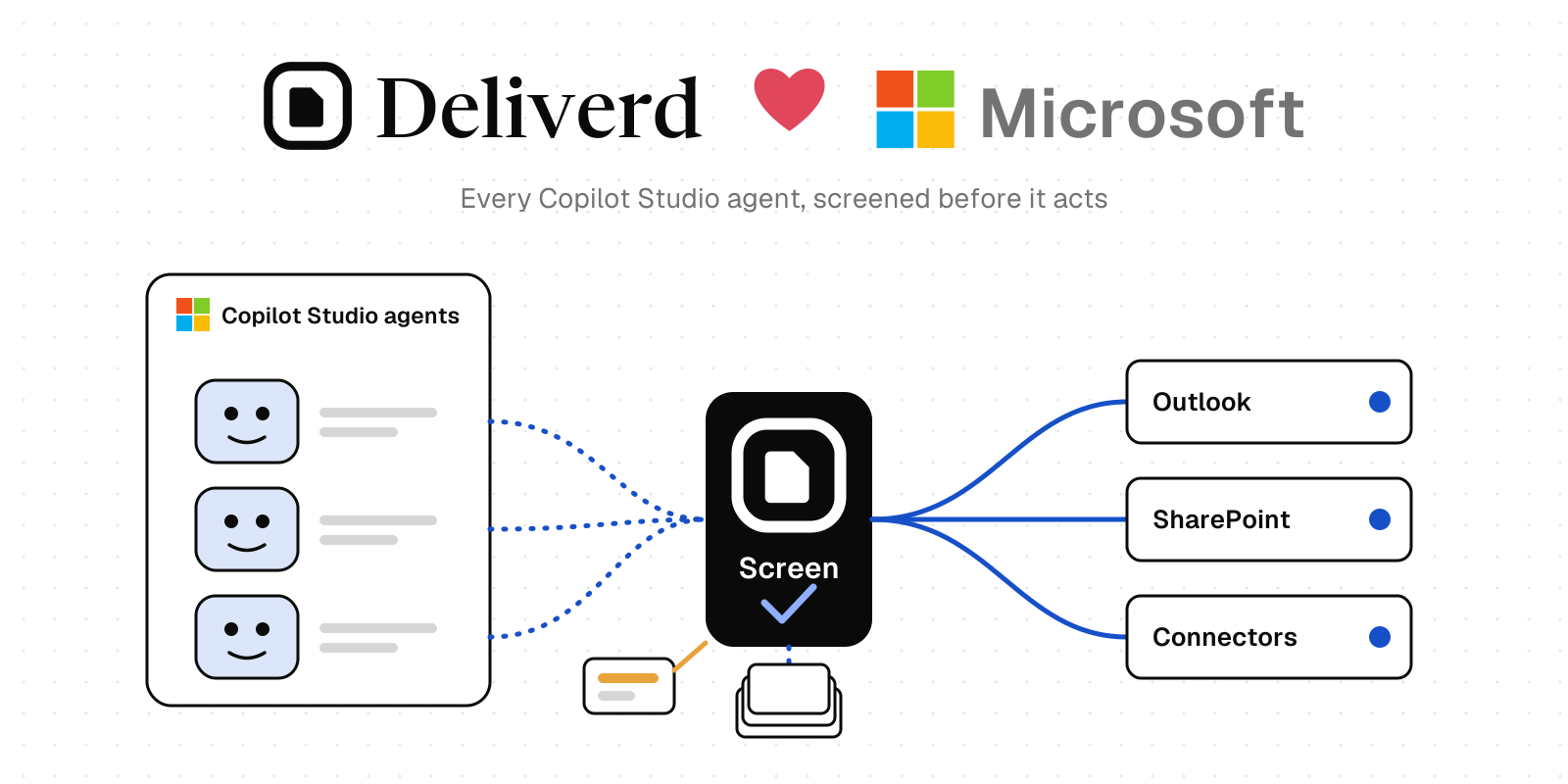
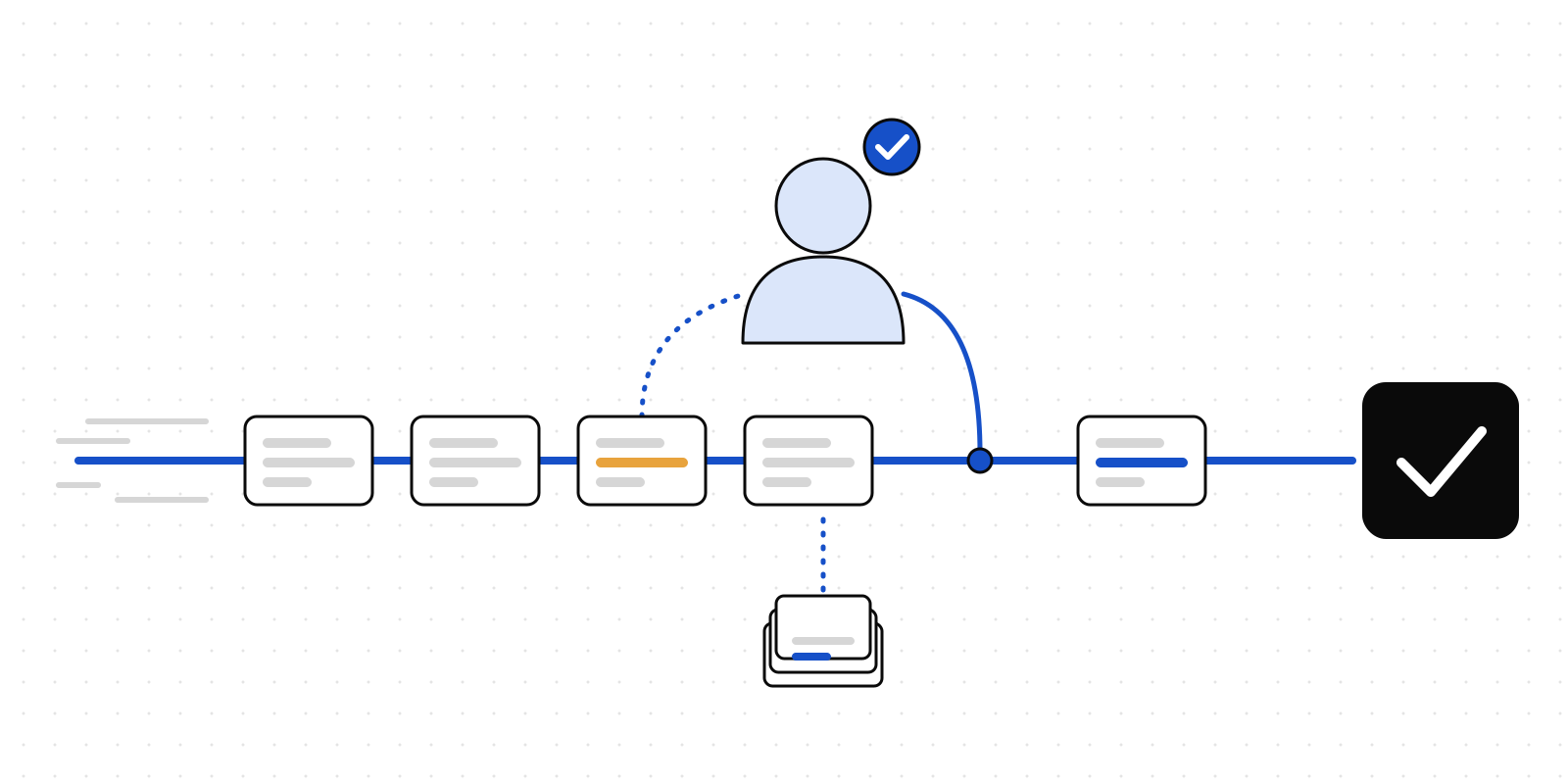
That is the moment Deliverd is built for. Before a consequential step, the agent asks. Your organisation's rules answer first, in priority order, with one of four outcomes: allow, deny, ask a person to approve, or ask a person to review. An earlier rule can carve out an exception to a later one, so "refunds over a set amount need a manager" and "refunds for this account go through" can both be true.
Three things follow from putting the rule there.
The routine settles itself. A rule that allows internal reports of internal data means nobody is asked about them again. People only see the cases a rule says they should, and the ones no rule covers yet. Admin → Analytics shows how many decisions policy settled without interrupting anyone, so you can see the friction you removed, not just the risk you caught.
Something new is a question, not a refusal. When an agent asks about an action no rule mentions, Deliverd doesn't block it and doesn't wave it through. It asks a person. Nobody has decided about it yet, and that is not the same as everyone being happy with it. A new idea gets a quick answer from the right person in Slack, Teams, email, the app or their phone, instead of waiting for a policy to be written first. When the same question keeps getting the same answer, write the rule and stop asking.
The proof writes itself. Every answer is kept: who was asked, what they saw, what they said and when. The approval is tied to the exact content and destination it was given for, and expires when the rule says it should, so a yes for one thing can't be stretched to cover another. When an auditor or a board asks, you hand over an evidence pack instead of rebuilding the story from inboxes.
The rules people already have
Most of the rules a compliance team cares about already exist somewhere, in a register, a data policy or a supplier review. Deliverd puts them where the action is.
- Which AI systems are approved. The AI register records each AI system, its classification and its controls. With enforcement switched on, work under a system that isn't approved and live, or has been suspended, waits until a person says otherwise.
- What data may reach a model. Data screening checks a prompt for personal data, secrets and confidential names before it is sent, against the data classes the register approved for that system. It can let it through, redact, ask a person or refuse. Secrets are refused by default.
- Who may decide. Organisation owners and administrators write the rules. An agent can't write its own, and an active rule version can't be edited, only replaced.
- How much an agent may do alone. The organisation sets the ceiling for what agents may do on their own, only with approval, or not at all. An agent's own setting can only be stricter.
Where this stops
A gate only helps when the agent asks. An agent that never asks is not stopped by Deliverd. What you get is that the question can be asked, it is answered by someone other than the agent, and the answer is written down. After acting, the agent reports what ran, and a report that differs from what was allowed is refused and recorded. The acts Deliverd carries out itself, such as publishing a report, are checked on the server every time.
We think that is the honest trade. Compliance doesn't need to see every step to keep control. It needs the risky steps to stop and ask, and a record it can trust.
Start with one action
You don't need a governance programme to begin. Pick the one action you would never let an agent take without asking, put a person in front of it, and keep the record. Then look at what came back. Most of the answers will be yes, and those become rules. The few that were no are the reason you started.
That is the deal Deliverd offers. Teams get on with the work, at the pace they want. Compliance gets the rules applied at the moments that carry risk, and a record of every decision. Nobody has to choose between moving fast and staying in control.