AI recommends, a person approves: what 900 CEOs said about control
21 October 2026 · Deliverd Engineering Team · 4 min read
This year Dataiku and The Harris Poll asked 900 chief executives of large companies, in eight countries, how AI is really going. Their Global AI Confessions Report: CEO Edition 2026 is worth reading in full. The short version is that the question has changed. In 2025 it was whether a company was adopting AI fast enough. In 2026 it is whether anyone can show what the AI did, and who said yes.
We read it with one question in mind: what does a business need at the moment an AI agent is about to act? Here are the numbers that answer it, with the page each comes from.
AI is in the decisions, not in charge of them
CEOs say AI informs up to around 40 business decisions a year each (p.8). Yet 51% keep a person in the loop on business-critical decisions, and 34% run exactly one model: the AI recommends, and a person approves (p.8). Only 19% let AI act on its own with people checking afterwards (pp.32, 34).
Trust is conditional, too. 80% of CEOs say they at least sometimes ask the AI to justify its recommendation (p.8). And 57% think a failure to explain an AI decision could cause a crisis that damages customer trust or the brand (p.17).
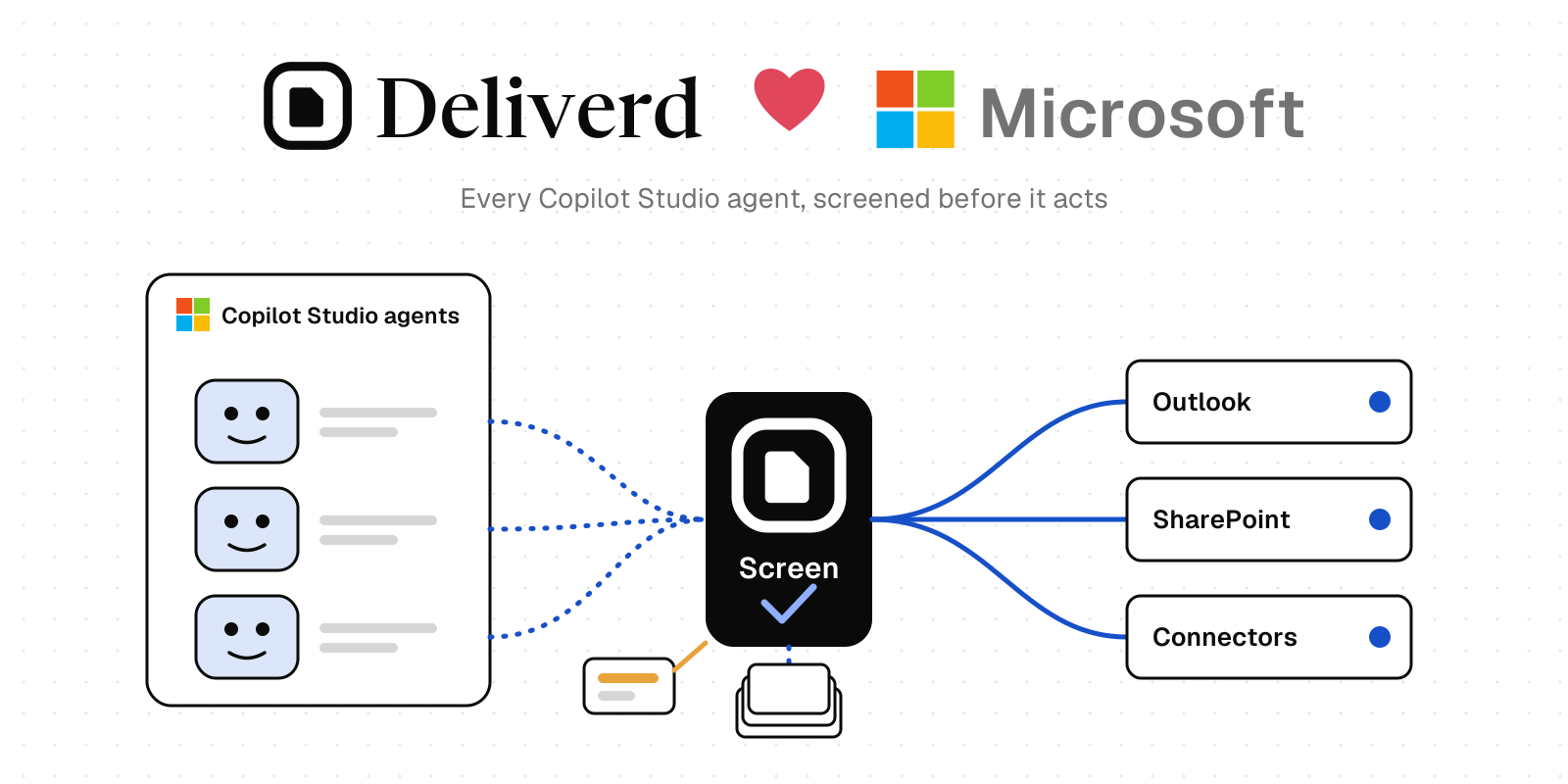
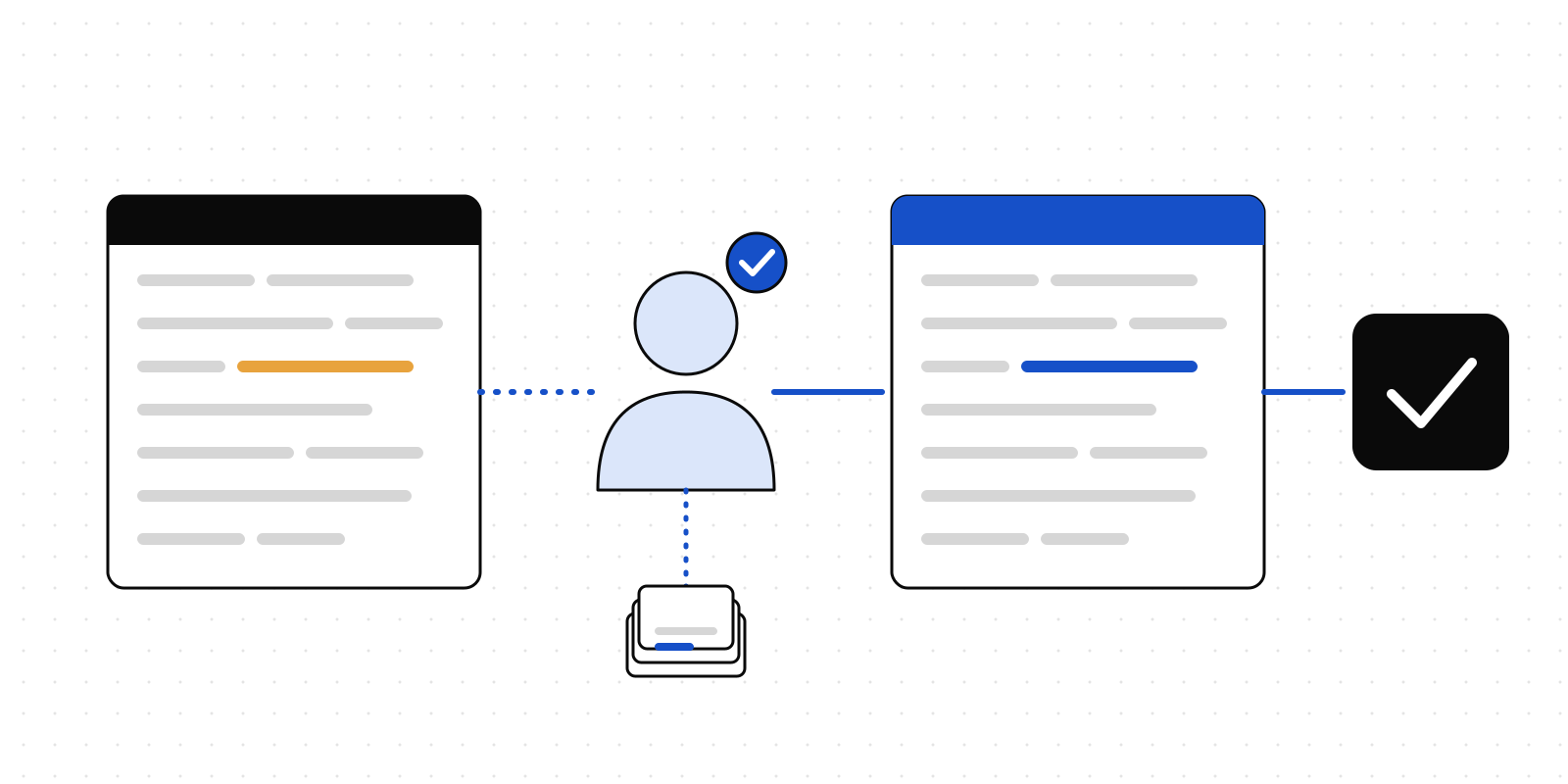
That is the pattern Deliverd is built for. Before a consequential step, your agent asks. Rules you set settle the routine cases on their own. Anything else goes to the right person in Slack, Teams, email, the app or a notification on their phone, with what the agent wants to do and why. They approve, reject with a reason, or ask the agent a question. The decision is kept: who decided, when, what they saw and what they said.
Governance came first
Asked what matters most for AI to succeed, CEOs put governance (39%) ahead of people (34%) and orchestration (28%) (p.18). The rules are part of the reason. 51% have delayed AI work because of regulatory uncertainty, up from 37% a year earlier (p.17). 79% are at least somewhat concerned that AI agents could expose their company to legal risk, and 46% are very or extremely concerned (p.17).
Waiting for certainty is one answer. The other is to act and keep a record that shows the rules were followed. Deliverd's Compliance Mode records an EU AI Act reading for each AI supplier, runs due diligence on what your suppliers' AI does, and keeps the evidence with the decisions it supports.
The proof has to reach the board
The pressure on the CEO is personal. 80% say their role is at risk if AI doesn't deliver measurable gains by the end of 2026 (p.2), and 62% say their board is pushing for measurable results (p.6).
Admin → Analytics in Deliverd now saves as an AI activity and control report, in your organisation's name: how many times people were asked to decide, how many were approved, how fast people answered, how much policy settled without interrupting anyone, and how many actions it stopped outright before they ran. It opens with a few plain sentences you can read aloud in a meeting.
Too much rests on too few vendors
76% of CEOs feel their company is over-exposed to too few AI vendors (p.12). It is hard to manage a dependency you can't see. The same Analytics page now adds up your agents' activity by the vendor behind each agent's platform, and says so in its opening lines when one vendor carries half or more of it.
The AI nobody approved
96% of CEOs believe their staff use generative AI tools without approval, and 42% think more than half of their workforce does (p.18). Rules alone won't change that. What helps is a quick way to get the right person to look at something, and screening of what gets sent to a model. Deliverd's data screening checks a prompt for personal data, secrets and confidential names before it reaches a model, and redacts them, asks a person, or refuses.
What to take from it
The report ends on control: the companies that do well in this next phase will be the ones that can govern AI, measure it and defend it when it matters, not the ones that adopt it fastest. We agree. For most businesses that starts with the first action you would never let an agent take without asking. Put a person in front of that one, keep the record, and widen from there.
Figures from Dataiku / The Harris Poll, Global AI Confessions Report: CEO Edition 2026: an online survey of 900 CEOs of companies with $500 million or more in annual revenue, in the United States, United Kingdom, France, Germany, the UAE, Japan, South Korea and Singapore, 2 February to 2 March 2026 (p.35). Page numbers refer to that report.