Perplexity's agents can stop and ask. Now someone answers.
15 November 2026 · Deliverd Engineering Team · 3 min read
Most people know Perplexity as the answer engine. Its Agent API is something more: you send one request and Perplexity runs the whole job. It searches the web, reads pages, picks a model from any of the big providers through one key, and calls tools. Those tools can be your own functions, remote MCP servers, or connectors to Slack, Linear, GitHub and the rest that a Project administrator sets up once.
A job that can call tools can change things. It can close tickets, post in channels and edit records. So the Agent API has a way to stop first.
The pause is there. The person isn't.
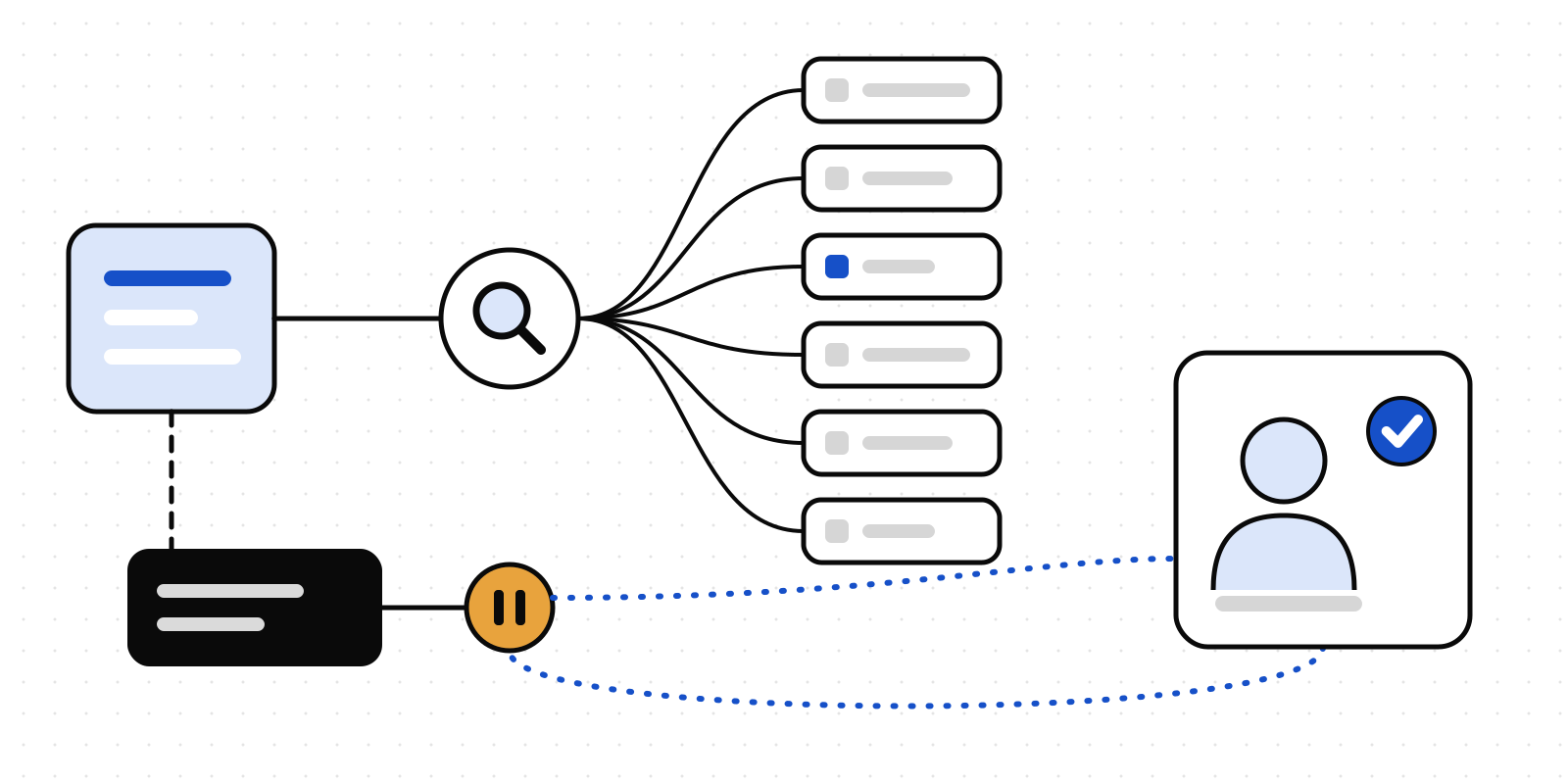
Set require_approval on an MCP server or connector and Perplexity won't run a covered call. The response comes back with an mcp_approval_request instead: the server, the tool and its arguments. You decide, then send an mcp_approval_response with a yes or a no, and the run carries on.
Perplexity leaves the deciding to you. Its docs say to show the user the proposed call and make the decision on your backend. That's where it gets hard: which person owns closing forty tickets in the release tracker, what happens when they're on holiday, how the agent hears "no, and here's why", and how you show an auditor next year who allowed which call.
One thing to know before you start. Perplexity runs MCP and connector calls without asking unless you set require_approval. OpenAI's default is the other way round. If a server can change something, set it.
A named person, from their inbox, Slack or Teams
@deliverd/sdk 0.39.0 and the Python SDK 0.28.0 add an adapter for the Agent API. Hand it your Perplexity client and the request you'd have sent:
from perplexity import Perplexity
from deliverd import Deliverd
from deliverd.adapters.perplexity import run_with_deliverd_approvals

response = run_with_deliverd_approvals(
    Perplexity(),
    Deliverd(),
    create_kwargs={
        "model": "openai/gpt-5.6-sol",
        "input": "Close the issues in our tracker that the last release fixed",
        "tools": [{"type": "connector", "id": "connector_linear",
                   "server_label": "linear", "require_approval": "always"}],
    },
    approvers=["platform-team"],
)
Each approval request goes to the platform team with the tool and its arguments, field by field. The adapter answers Perplexity with their decision and keeps the run going until it asks for nothing more. If they say no, the answer carries their reason and the model reads it, so it changes course instead of trying again.
Your own functions go the same way. Pass the function that runs them and only the approved calls run. A declined one goes back to the model as a sentence saying a person said no, and why.
Each request is keyed by Perplexity's id for it, so if your process restarts and asks again, it finds the same request rather than filing a second one. Accounts under zero data retention can't continue a run by its id. For those, replay=True sends the conversation back instead.
The TypeScript version is runPerplexityWithDeliverd from @deliverd/sdk/adapters. Both work with Perplexity's own SDKs or with the OpenAI SDK pointed at Perplexity.
In Perplexity itself
Perplexity's paid plans can add a remote MCP server as a custom connector, and on Enterprise an administrator decides who may. Add Deliverd's MCP server and Perplexity can ask a person before it acts, then publish what it makes. The setup guide has the address.
What Deliverd doesn't do
Deliverd doesn't run the agent, search the web or pick the model. Perplexity does that. Deliverd decides whether an agent's action happens, asks the right person when a rule doesn't settle it, and keeps the record of who agreed.
The setup guide has the details. Start free and try it on one connector first. We'd like to hear how your approvers get on.